ICMR hands over Mobile Stroke Units to Assam, cuts treatment time to 2 hours | India News
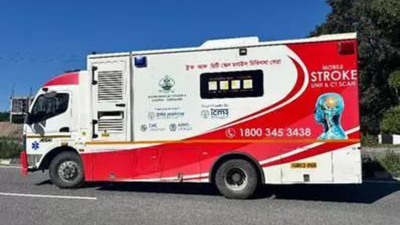
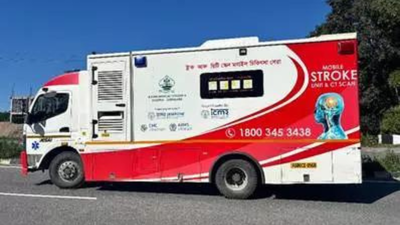
NEW DELHI: The Indian Council of Medical Research (ICMR) on Wednesday handed over two Mobile Stroke Units (MSUs) to the Government of Assam, marking a major shift in stroke care—from patients travelling long distances to hospitals, to hospitals reaching patients in remote areas.Stroke is among the leading causes of death and long-term disability in India. In an acute stroke, nearly 1.9 billion brain cells are lost every minute if treatment is delayed, making access within the golden hour critical. However, reaching a stroke-ready hospital remains a challenge in rural and difficult terrains.Handing over the units, Rajiv Bahl, Secretary, Department of Health Research and Director General, ICMR, said Mobile Stroke Units—first developed in Germany—have now been successfully evaluated in rural and remote parts of Northeast India. “India is the second country globally to report successful integration of an MSU with emergency medical services for treating acute ischemic stroke patients in rural settings,” he said.The initiative, developed under the leadership of Prime Minister Narendra Modi and guided by Union Health Minister Jagat Prakash Nadda, aims to ensure advanced healthcare reaches the poorest and most marginalised populations, even in the most challenging geographies.Sharing the state’s experience, P Ashok Babu, Secretary and Commissioner, Health and Family Welfare, Government of Assam, said the handover strengthens the state’s emergency response system and ensures continuity of the life-saving service under state ownership.The MSU functions as a hospital on wheels, equipped with a CT scanner, teleconsultation with specialists, point-of-care diagnostics and clot-busting drugs, enabling diagnosis and treatment at or near the patient’s home.The impact has already been evident. During the pilot and evaluation phase, the model reduced treatment time from nearly 24 hours to about two hours, cut stroke-related deaths by one-third, and reduced long-term disability by eight times. Between 2021 and August 2024, the MSUs handled over 2,300 emergency calls, with 90% of patients treated directly from their homes after integration with the 108 ambulance service.