Decline of Himalayan rivers could trigger nuclear war: UK report | India News
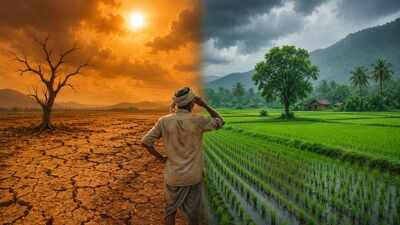
LONDON: The decline of rainforests and glacier-fed rivers could lead to global competition for food and water as early as the 2030s, UK intelligence chiefs have warned, adding that the decline of Himalayan rivers will “almost certainly escalate tensions” between China, India and Pakistan, potentially leading to nuclear war.The British govt report warns that ecosystem degradation is occurring across all regions and “every critical ecosystem is on a pathway to collapse”.There is a realistic possibility that some ecosystems (SE Asia coral reefs, boreal forests and the Himalayas) will start to collapse from 2030, and others (rainforests and mangroves) start to collapse from 2050, it states.“Severe degradation or collapse would drive displacement of millions, change global weather patterns, increase global food and water scarcity, and drive geopolitical competition for remaining resources,” the 14-page report said.The impacts will range from crop failures, intensified natural disasters and infectious disease outbreaks to conflict within and between states. Migration and organised crime will rise and terrorist groups will exploit political instability, it said.The report, titled “Global Biodiversity Loss, Ecosystem Collapse and National Security”, was published by the Department for Environment, Food and Rural Affairs (Defra). But TOI understands it was actually put together by the Joint Intelligence Committee, which coordinates MI5 and MI6. The report assesses how biodiversity loss and ecosystem collapse impact UK national security and warns that the UK’s food security will be under threat as Britain imports 40% of its food and is not self-sufficient in fertilisers. “Both existing (plant pre-breeding, regenerative agriculture) and emerging technologies (AI, lab grown protein, insect protein) offer potential solutions,” it states.According to the UK Times newspaper, the report was due to be published last autumn but “was blocked by No. 10 for being too negative”. An “abridged version” has been published following a freedom of information request. The Times claims to have seen the “full internal version”, which states that the degradation of rainforests in the Congo and the drying up of rivers fed by the Himalayas could drive people to flee to Europe, leading to “more polarised and populist politics in the UK” and putting “additional pressure on already strained national infrastructure”.The internal version also warns of the risk of nuclear war from the decline of Himalayan rivers.“Critical ecosystems that support major global food production areas and impact global climate, water and weather cycles are the most important for UK national security. The Amazon and Congo rainforests, boreal forests, the Himalayas and Southeast Asia’s coral reefs and mangroves are particularly significant for the UK,” it states.The report notes that Britain’s large South Asian diaspora could make the UK an attractive destination for people from the region.“Countries best placed to adapt are those that invest in ecosystem protection and restoration, and resilient and efficient food systems. Restoration of some ecosystems (tropical forests) is more feasible than others (coral reefs, Himalayas),” it states.A Defra spokesperson said: “Nature underpins our security, prosperity, and resilience and understanding the threats we face from biodiversity loss is crucial to meeting them head on.”