Is an archaeological marvel hiding near Chandigarh? | India News
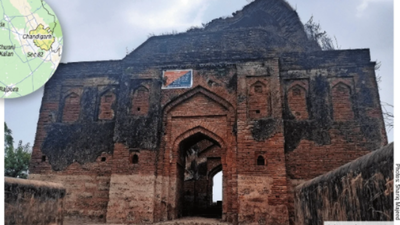
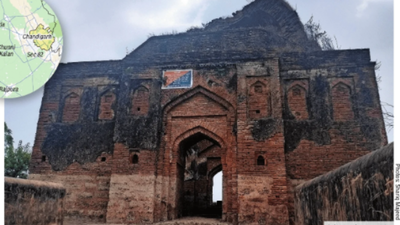
Walk down the narrow lanes of this small town — located about 45km southwest of Chandigarh — and you’d find it hard to believe that Chinese scholar Hiuen Tsang trod these very paths some 1,300 years ago. Or that north Indian ruler Prithviraj Chauhan had once passed this way at the head of his army.It’s as if history no longer felt welcome here and moved out, mournful and uncared for. But there was a time when history ebbed and flowed through its narrow lanes. Sirhind — or Sar-iHind, the crown of India — was, after all, the last major outpost before invaders reached the Yamuna. Temples of the Hindu Shahis — who made Sirhind their capital, with its grandeur said to be second only to Lahore’s — still stand south of Islamabad, the oldest surviving temples in Pakistan.
.
But monuments and structures that are often eloquent narrators of past glories stand in Sirhind as mute spectators, listlessly dotting farmlands and alleyways. In many cases, they exist — plastered, painted over, forgotten — as bricks that were repurposed as construction material to build nameless walls of homes that have sprung up in recent decades.The town, which forms a twin city with the adjacent Fatehgarh Sahib, has not only shrunk in size and significance, it has also gone missing from Punjab’s mindscape and its cultural discourse. It is where Humayun defeated the Suris to re-establish Mughal rule and where Guru Gobind Singh’s sons were so cruelly bricked up alive. Sirhind is said by some to go back to the time of the Mahabharata, a melting pot of lore and legend. But, then, how did history itself become a victim in historic Sirhind?Cost Of NeglectDr Daljit Singh, professor of history at Punjabi University, Patiala, told TOI that Sirhind is a treasure trove for archaeologists, but it hasn’t got its due. Encroachments are gobbling up what should be protected spaces. The sense one gets on talking to locals is that every brick and old structure here can tell its own history. The only tough part is to actually find and identify them for what they really are.
.
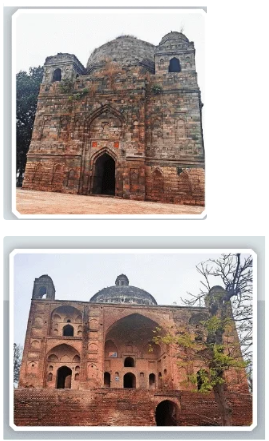
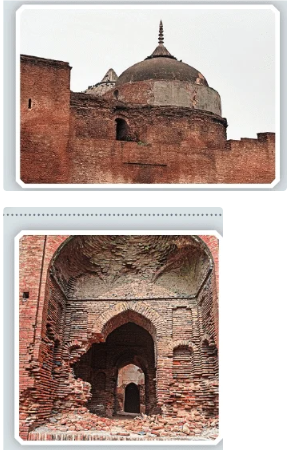
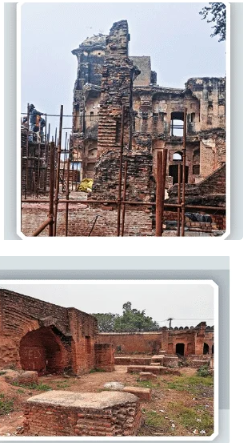
There is little evidence of any sustained effort by Archaeological Survey of India (ASI) to explore the historical importance of the area. Despite its rich past as a major provincial centre, there has not been a survey in years to identify historical remains that may lie buried beneath the ground.Some sites, like Gurudwara Shri Fatehgarh Sahib, Rauza Sharif Shrine and a Jain Mandir, are well maintained. But many historical places like Jahazi Haveli of Diwan Todar Mal — not to be confused with Raja Todar Mal of Akbar’s Navratna fame — Aam Khas Bagh and Sadna Kasai Masjid have remained neglected for long. Areas like Harbanspura, Mahadian, Bara and Talanian, where one would stumble on relics three decades ago, are yet to be explored. Buildings and monuments lie crumbling in wheat fields.In the 19th century, French traveller V Jacquemont had described Sirhind as “the biggest ruins in India after Delhi”. Yet today, few ever talk of it. As if it had fallen off the map. There is no trace of the Hindu Shahis in any museum in the country.Buried PastElderly residents of Sirhind recall instances of when tilling of the land would turn up artefacts. “Every few days, we would hear someone’s plough had dug up something from history. Bricks were very common to find. Even now such articles turn up. The famous Laalan Wala Bazar near Talanian village is all farmland now,” said 77-yearold Sukhdev Singh. “There were at least four tombs in the area, but we know of two, the Ustad and Shagird tombs. We don’t know what happened to the other two,” he added.Shamsher Singh, 75, of Talanian village, said silver coins, Sirhind bricks and artefacts of various shapes were regularly found near tombs and in the fields. “There was a raised structure near the village but it gradually disappeared as people levelled it up. Now, farming is going on in the same ground. Govt should have protected these historical sites,” he said.At Mahadiyan, famed for how often buried history was dug up during farming, former sarpanch Balwant Singh, 75, said one of the mausoleums he saw as a child has vanished and houses have come up there. “Some 30-35 years ago, ‘Tailay’, which was a sort of currency, would be found in the fields every now and then. Who knows what else would have been found had there been a proper dig?” Khalifa Syed Muhammad Sadiq Raza, who manages affairs at the mausoleum (dargah) of the 17th-century Sufi saint Shaikh Ahmad Faruqi Sirhindi (Mujaddid Alf Sani), said Sirhind was an important province for the Mughals as it lay midway between Delhi and Lahore.
.
Punjab Shahi Imam, Maulana Usman Ludhianvi, said, “Sirhind is an important historical area and needs to be explored in the historical context”.Anecdotes and tales of Sirhind’s buried and forgotten history still keep coming up in conversations. But there are not many who want the past to be dug up. Their fear is that history unearthed would before long get overrun by the present. And will Sirhind then remain the land of fables and myth? Asked about excavations in Sirhind, Sanjeev Kumar Tewari, director-tourism, culture and archaeology, said none has been carried out in the recent past. ASI is carrying out excavations at Sanghol in Fatehgarh Sahib and some other places nearby, he said.“As of now, Jahazi Haveli is being restored. Around 80% of the work has been completed,” he said. Asked why other monuments are in such a state of disrepair, he said minor restoration work was done at the Ustad and Shagird tombs and at the Tomb of Bibi Subhan. “We are getting estimates drawn up for restoration of other monuments. Also, the property towards the rear of Aam Khas Bagh is being given out for commercial usage in PPP mode,” he said.Deputy commissioner Sona Thind acknowledged that Aam Khas Bagh and other tombs needed maintenance and said she has written about it to the tourism and cultural affairs department.