India’s move to decarbonise cement, aluminium sectors may help it navigate the EU’s carbon border tax in due course | India News
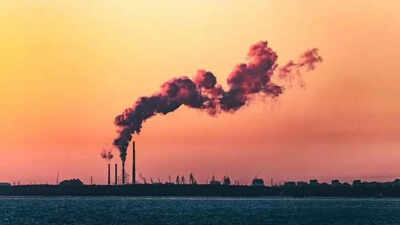
NEW DELHI: In a move that may help India’s high-emission industries navigate the EU’s carbon border tax regime by adopting clean manufacturing processes in due course, Niti Aayog, the govt think tank, has come up with comprehensive roadmaps for decarbonisation of aluminium and cement sectors. This will also contribute to the country achieving its long-term net-zero emission (carbon neutrality) goal for 2070.The EU’s carbon border tax — Carbon Border Adjustment Mechanism (CBAM) — is a tool to put a price on high-emission goods such as cement, aluminium, iron & steel and fertilisers that enter the 27 EU nations.If India does not take steps to decarbonise these sectors, they will continue to attract tariff burden in the form of carbon border tax, impacting the country’s exports.The decarbonisation roadmaps for cement and aluminium, released by Niti Aayog last Wednesday, will also serve as reference manuals for India to decarbonise other sectors, in sync with the country’s climate action commitments under the Paris Agreement.The Aayog’s report shows that cement manufacturing, a significant source of carbon emissions, contributed roughly 2.4 GtCO2e of emissions worldwide in 2023. India’s production of cement resulted in roughly 246 MtCO2e of emissions, which was around 6% of national GHG emissions.Under the decarbonisation strategy, as suggested by the roadmap, the cement sector will reduce its carbon intensity from 0.63 tCO₂e per tonne of cement to approximately 0.09-0.13tCO₂e per tonne by 2070.To enable deep decarbonisation in this sector, the roadmap proposes to prioritise the use of refuse-derived fuels, clinker substitution, scale-up of Carbon Capture, Utilisation and Storage (CCUS) and effective implementation of carbon credit trading scheme.Similarly, the decarbonisation roadmap for aluminium sector identifies a three-phase solution: transition to renewable energy-round the clock (RE-RTC), enhanced grid connectivity in the short term and adoption of nuclear power in the medium term, and long-term integration of CCUS.The report reveals that production of aluminium accounted for about 2.8% of India’s total GHG emissions in 2023.