Amid global energy volatility, India backs balanced energy mix and price stability
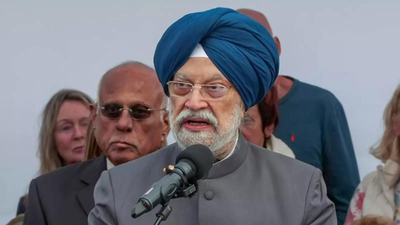
Hardeep Singh Puri (PTI image)
NEW DELHI: Against a backdrop of “prolonged global volatility” triggered by geopolitical tensions, Union petroleum and natural gas minister Hardeep Singh Puri said on Tuesday that fuel prices had risen sharply in major world economies, but India had shielded its citizens from severe price shocks.Speaking at the inauguration of India Energy Week in Goa, Puri said India recognised the rising energy demand across developing economies and had offered to work with other countries to build a “secure, resilient and inclusive” energy future through cooperation, innovation and shared responsibility.
UAE minister for industry and advanced technology and Adnoc managing director and group CEO Sultan Al Jaber said the pace and scale of India’s growth required a special kind of partnership that was “strategic, long-term, agile and flexible”.While India was steadily transitioning towards renewable and alternative energy sources, Puri said conventional fuels would remain essential to meet growing demand. “Energy transition, energy security and system resilience must advance together, and energy addition has emerged as a practical pathway to balance these priorities,” he said.Warning against under-investment, Puri said that if investment in existing oil and gas production were to stop today, global oil output would decline by around 8% annually over the next decade—equivalent to losing more than the combined annual production of Brazil and Norway each year.On the global electricity front, Puri said renewables had expanded rapidly, with their share rising from about one-fifth a decade ago to nearly one-third, but conventional energy continued to play a critical role. With the global energy sector under pressure from geopolitical shifts and structural change, he said nearly 80% of incremental global energy demand was coming from emerging and developing economies, a trend expected to intensify as access to mobility, cooling and digital services expanded. Ensuring affordable and clean energy access, he added, remained a key development and equity challenge.With India being the world’s third-largest energy consumer, Puri said the government was building capacity, improving market conditions and supporting the full energy mix through reforms and investments. He described India Energy Week as one of the world’s most significant platforms for energy dialogue, cooperation and leadership.Al Jaber said reliable partnerships were the real strategic reserve, urging leaders to look beyond short-term volatility to the transformative opportunity presented by rising global energy demand. He said India had emerged as a decisive driver of global demand. “Progress and growth at this scale and pace require a special kind of partnership—strategic, long-term, agile and flexible, steadfast and based on trust. This is precisely what defines the UAE-India relationship,” he said.He added that the UAE leadership had built an economy open to the world and, in just three years, had signed 35 comprehensive economic partnership agreements, including its first with India, while attracting more than $45 billion in strategic foreign direct investment in 2025.


