
Another day, another low for Re against $ amid turbulence
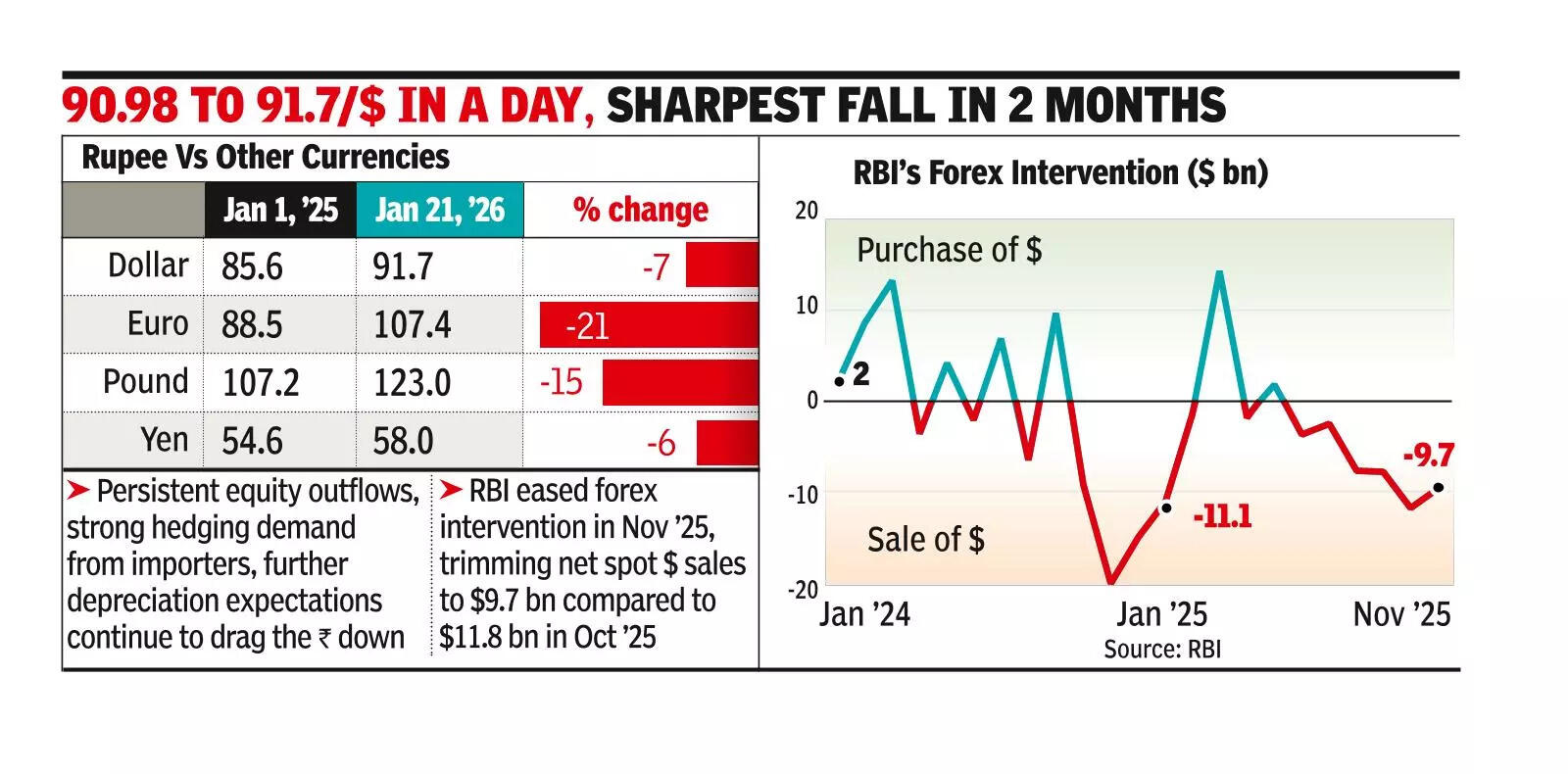
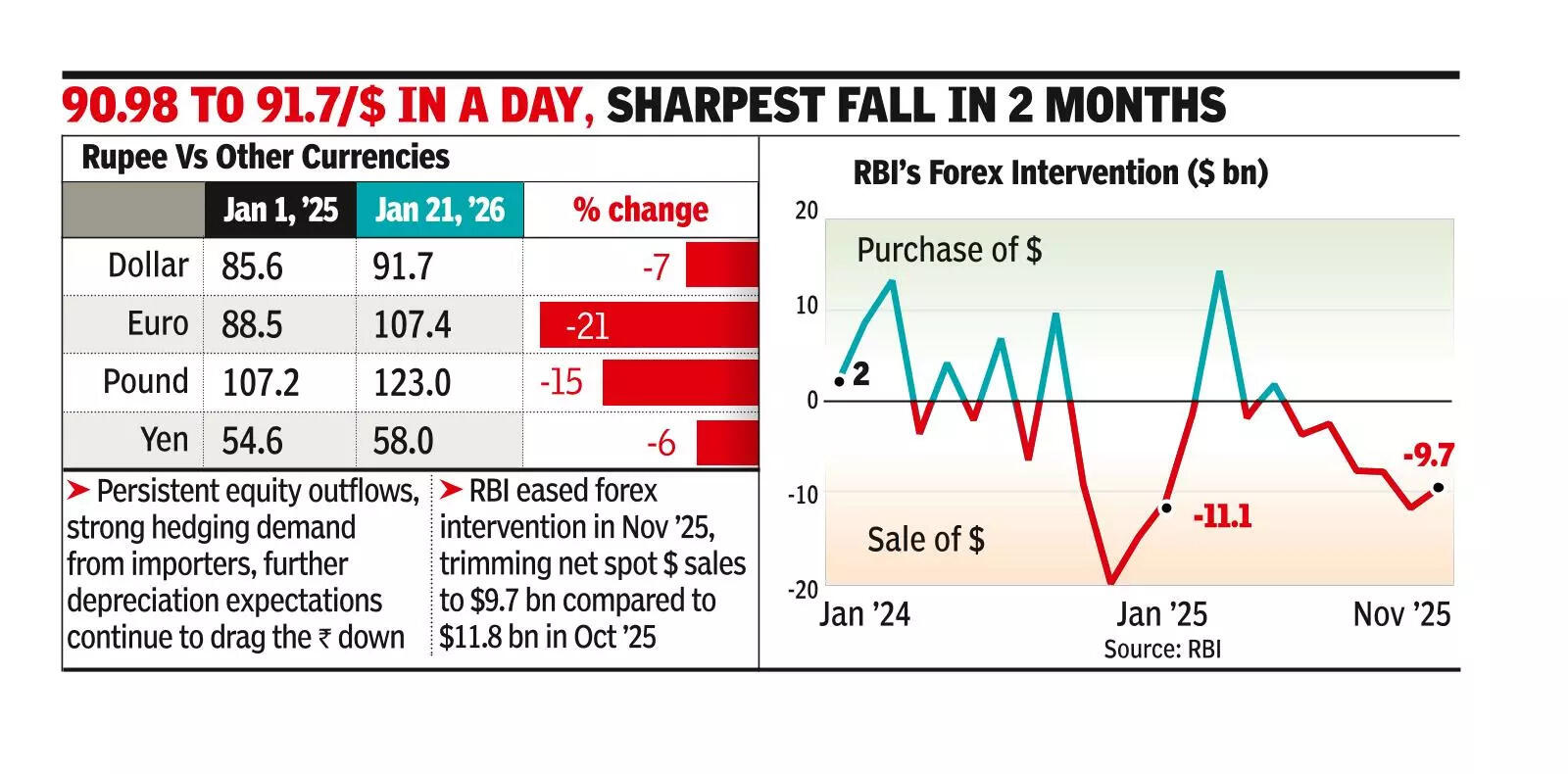
“With geopolitical issues deteriorating and no sign of any rollback in US tariffs on India’s exports-rather, talk of an additional 25% levy linked to trade with Iran-the rupee will remain under pressure. At the same time, foreign investors have continued to sell Indian equities, with net outflows of about $3.5 billion in Jan. In these circumstances, the rupee is unlikely to strengthen meaningfully except through RBI intervention,” said K N Dey a forex consultant.Meanwhile RBI data showed it eased forex intervention in Nov 2025, trimming net spot dollar sales to $9.7 billion compared to $11.8 billion in Oct. Despite such high sales, rising gold valuations have cushioned the hit to reserves. In Nov RBI spot operations saw $14.4 billion in purchases against $24.1 billion in sales, yielding net sales of $9.7 billion, or Rs 85,402 crore, at an implied rate of ~Rs 87.9 a dollar.“The positive consequence of the rupee’s movement is the export advantage at a time when we still face a 50% tariff in the USA. However, continued depreciation also increases uncertainty for corporates and can lead to greater caution,” said Sabnavis.Market participants said persistent equity outflows and stronger hedging demand from importers, amid expectations of further depreciation, continued to weigh on the currency. While India’s current account deficit remains manageable, weak capital inflows have left the rupee vulnerable to external shocks.Indian equities fell 0.3% on the day, extending losses after their steepest drop in more than eight months in the previous session. Foreign investors have pulled out about $3 billion from Indian equities so far in Jan, following record outflows of nearly $19 billion in 2025.


