
India-EU FTA Will Boost Employment In Textile Industry By Creating Up To 7 Million New Jobs: Piyush Goyal

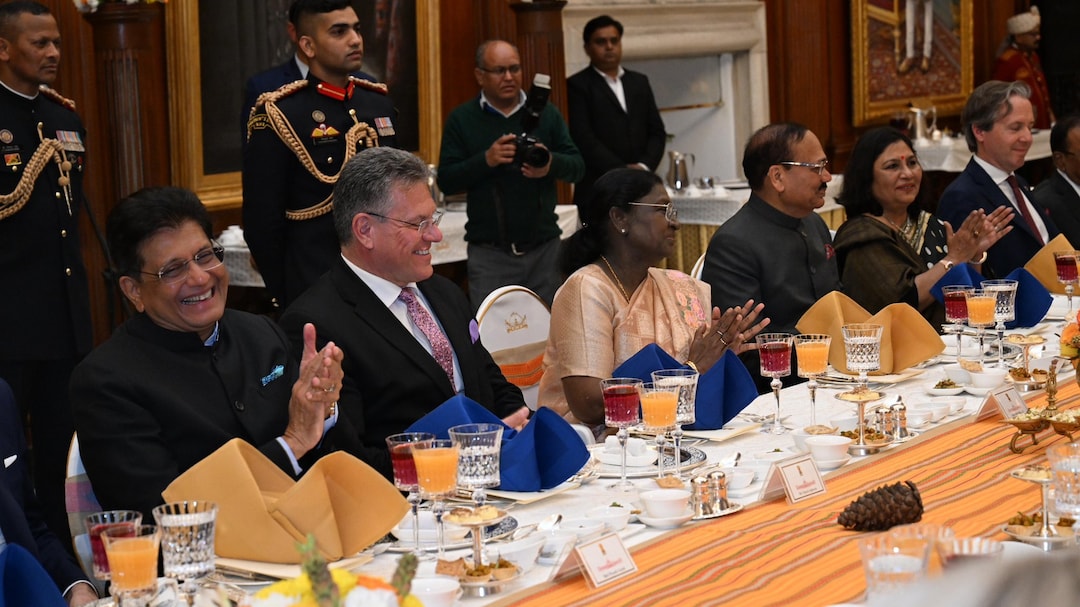
The recently clinched India-EU Free Trade Agreement opens up massive investment opportunities and access in the textile industry and is slated to create 6-7 million new jobs, Commerce and Industry Minister Piyush Goyal said on Tuesday.
The sector which has been navigating tricky waters ever since Donald Trump struck it with 50% punitive tariffs, might just sail through on the back of the pact, which is being dubbed as ‘mother of all deals’. As part of the deal, the 27-nation bloc is providing zero-duty access to its $263.5 billion textiles export market, the Government’s Textile Ministry stated.
At present, the European Union is the second biggest market for India’s textile and apparel exports, after the US and the trade pact is expected to correct a tariff disadvantage faced by textile exporters against competitors like Bangladesh, Pakistan and Turkey.
“The FTA corrects a long-standing tariff disadvantage vis-a-vis competitors, such as Bangladesh, Pakistan and Turkey. The agreement gives a decisive boost to the labour-intensive sector, enhancing price competitiveness and expanding market access in one of the world’s most sophisticated consumer markets. The textile sector employs around 45 million people directly in India,” the Textile Ministry said.
The US, which has levied 50% tariffs on Indian goods, is the single-largest market for India’s textile and apparel exports, accounting for almost 28% of the country’s textile and apparel exporters’ total revenue.
Gaining zero-duty access in textiles and clothing, covering all tariff lines and reducing tariffs by up to 12%, would open up the EU’s Rs 22.9 lakh crore ($263.5 billion) export market, the ministry said.
Building on India’s current Rs 3.19 lakh crore ($36.7 billion) in global textile and apparel exports, including $7.2 billion to the EU, such access would significantly expand opportunities, particularly in yarn, cotton yarn, man-made fibre apparel, ready-made garments, men’s and women’s clothing and home textiles, it added.
Moreover, the ministry said this would enable MSMEs to scale, generate employment, and reinforce India’s positioning as a reliable, sustainable, and high-value sourcing partner. The European Union is India’s second-largest export destination for textiles and apparel, after the US.
India’s textile exports to the EU have shown positive growth in the last 5 years and are diversified across multiple value-added and labour-intensive segments. Ready-Made Garments form the largest component (60%) of exports, followed by Cotton textiles (17%), Man-made fibre and textiles (12%).
Handicrafts (4%), Carpets (4%), Jute Products (1.5%), Woollen (0.6%), Handloom (0.6%) and Silk Products (0.2%), form an important part of India’s textile exports to the EU, underscoring the labour-intensive sectors of textiles, apparel and handicrafts, artisanal and MSME-driven character of India’s textile trade with the European market.
Improved access to the EU market is expected to boost production, capacity utilisation and employment across labour-intensive MSME clusters, the Textile Ministry stated.
The FTA will also encourage investment, technology transfer, and sustainability-linked up-gradation, particularly in MMF, technical textiles and green manufacturing aligned with EU standards, facilitating deeper integration into global value chains, it added.
(With inputs from PTI)
Watch LIVE TV, Get Stock Market Updates,
Top Business, IPO and
Latest News on NDTV Profit.