
Insurers set to move away from one-size-fits all models


MUMBAI: Insurers are expected to adopt more disciplined underwriting and pricing strategies as the Irdai transitions to Risk-Based Capital (RBC) norms, moving away from a ‘one-size-fits-all’ solvency model to align capital requirements with actual risk profiles. Simultaneously, the regulator has cleared the implementation of IFRS 17 (Ind AS 117), which fundamentally redefines the ‘topline’ by recognising revenue only as insurance services are provided over the policy term, rather than recording the total premium collected upfront.The Irdai board this week cleared two changes from April 2026. The first is risk-based capital, which will require insurers to hold capital in proportion to the risks they carry rather than meet a flat solvency threshold. Riskier books such as long-term guarantees, volatile claims portfolios and catastrophe-exposed business will need more capital, while conservative, well-priced or well-reinsured books will require less. This replaces the earlier approach where capital needs did not fully reflect the nature of risks on insurers’ balance sheets.
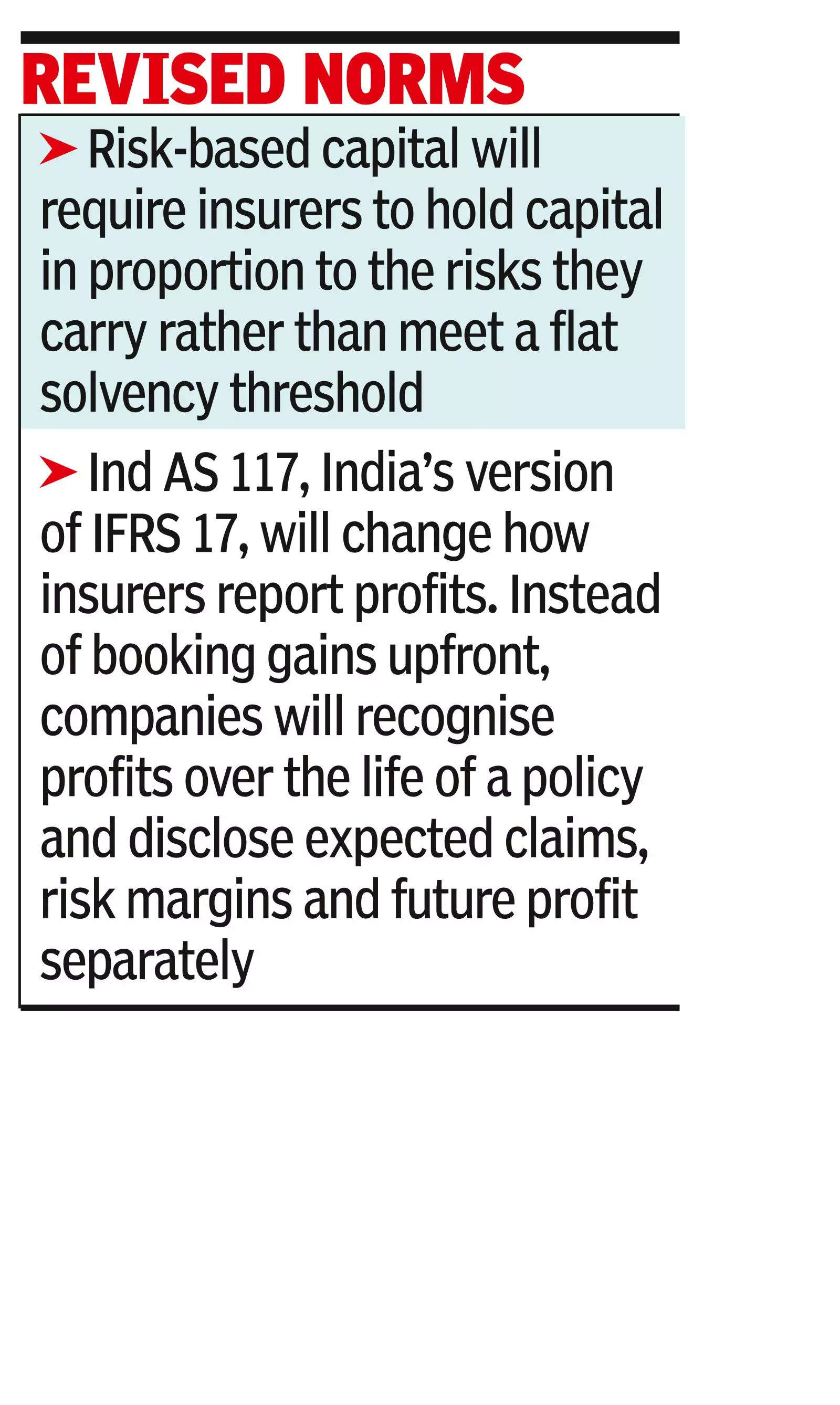
The second is Ind AS 117, India’s version of IFRS 17, which will change how insurers report profits. Instead of booking gains upfront, companies will recognise profits over the life of a policy and disclose expected claims, risk margins and future profit separately. According to industry executives, this will make loss-making products harder to mask and bring greater discipline to pricing and reserving.The impact will vary by segment. Life insurers are expected to reassess long-term savings and guaranteed products that consume more capital and produce volatile earnings, while simpler products such as term insurance and unit-linked plans become relatively more attractive. Insurers are likely to rework guarantees, sharpen pricing and align investments more closely with long-term liabilities.General insurers will face higher capital charges on lines with uncertain or long-tail claims such as motor third party, crop and catastrophe-prone property. Persistent under-pricing will be harder to sustain, pushing insurers to rely more on reinsurance, tighten underwriting and scale back structurally loss-making segments.Health insurance will also see pressure, especially in thin-margin group and corporate covers that are priced aggressively for volume. Retail health products with better pricing discipline and cost controls will fare better, while insurers are expected to push co-pays, tighter hospital networks and stronger claims management to manage risk.Across the sector, risk and capital are set to become central to business decisions. Insurers with weak balance sheets or poor pricing may need fresh capital, slow growth or consider consolidation, while investment in data systems, actuarial talent and risk management will rise. Clearer disclosures under the new regime are expected to give investors and policyholders a sharper view of sustainable profitability.