January 26, 1950: Revisiting India’s first Republic Day — the parade and those who watched history unfold | India News
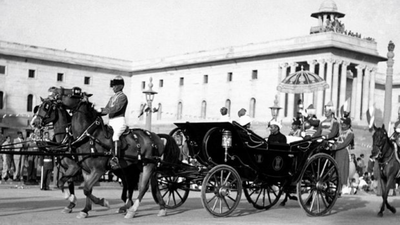
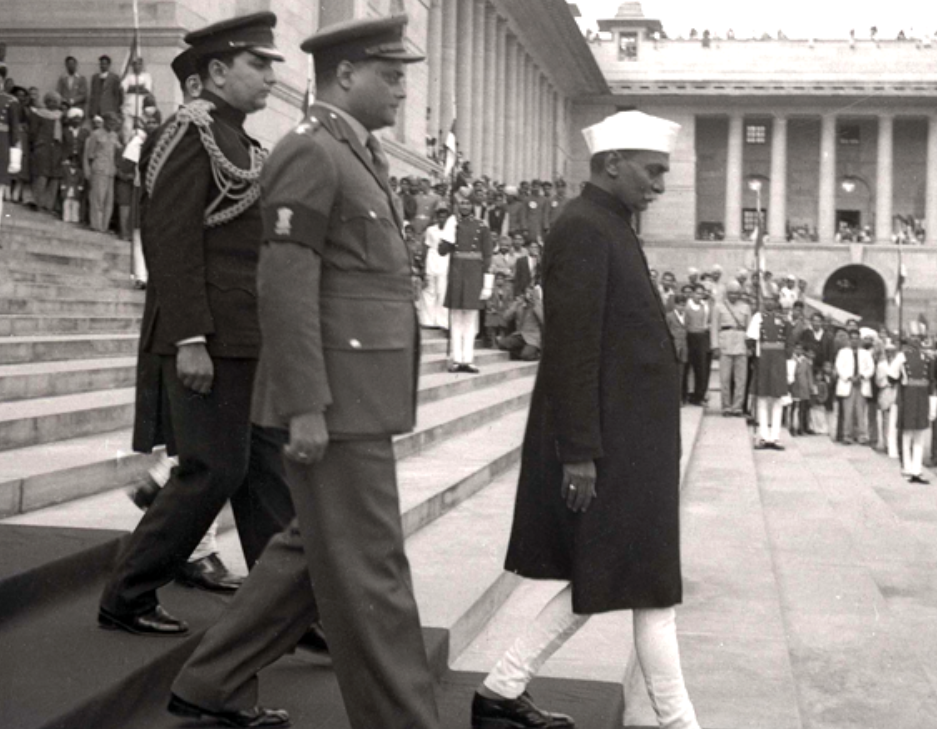
President Rajendra Prasad leaves for first Republic Day parade in buggy (File photo)
NEW DELHI: As India celebrated its 77th Republic Day, Kartavya Path once again became the setting for the country’s most enduring national ritual. President Droupadi Murmu unfurled the national flag — the Tiranga — amid elaborate celebrations, in the presence of the country’s top leadership and chief guests, European Commission chief Ursula von der Leyen and European Council president Antonio Costa. Their presence reflected India’s expanding global engagement, even as attention turned to what officials have described as the “mother of all deals” between India and the European Union.
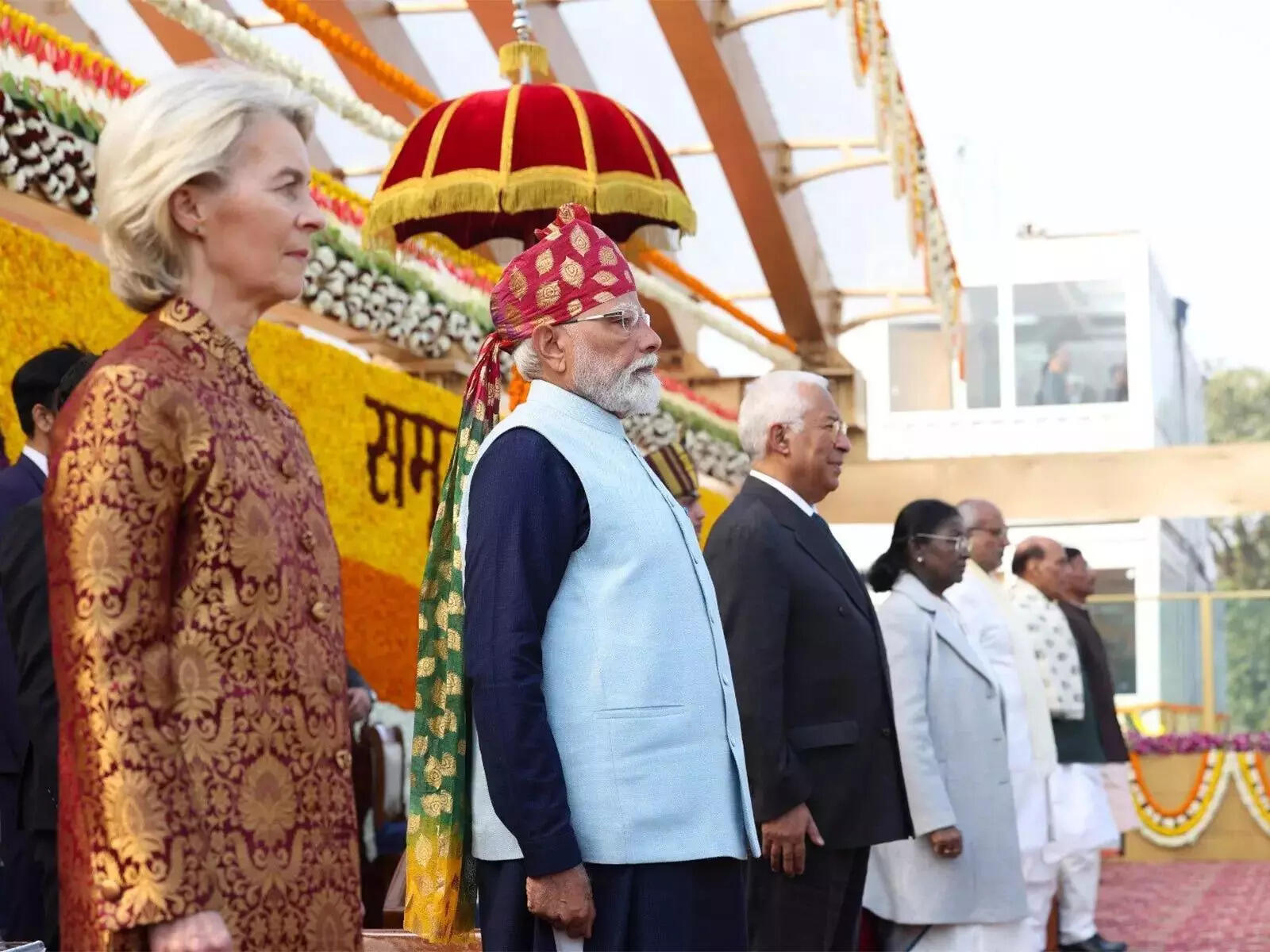
The celebrations on Monday were grand, as always — but this year carried a sharper edge. Against the backdrop of Operation Sindoor, launched in May 2025, the display of India’s military strength sent a clear and deliberate message.
For the first time, the parade showcased the Army’s phased “Battle Array Format,” integrating ground forces with aerial elements. The display featured a high-mobility reconnaissance vehicle and India’s first indigenously developed armoured light specialist vehicle.In another first, a military contingent from the European Union took part in the parade. Carrying military staff flags and those of EU naval missions Atalanta and Aspides, it marked the EU’s first participation in a military parade outside Europe.
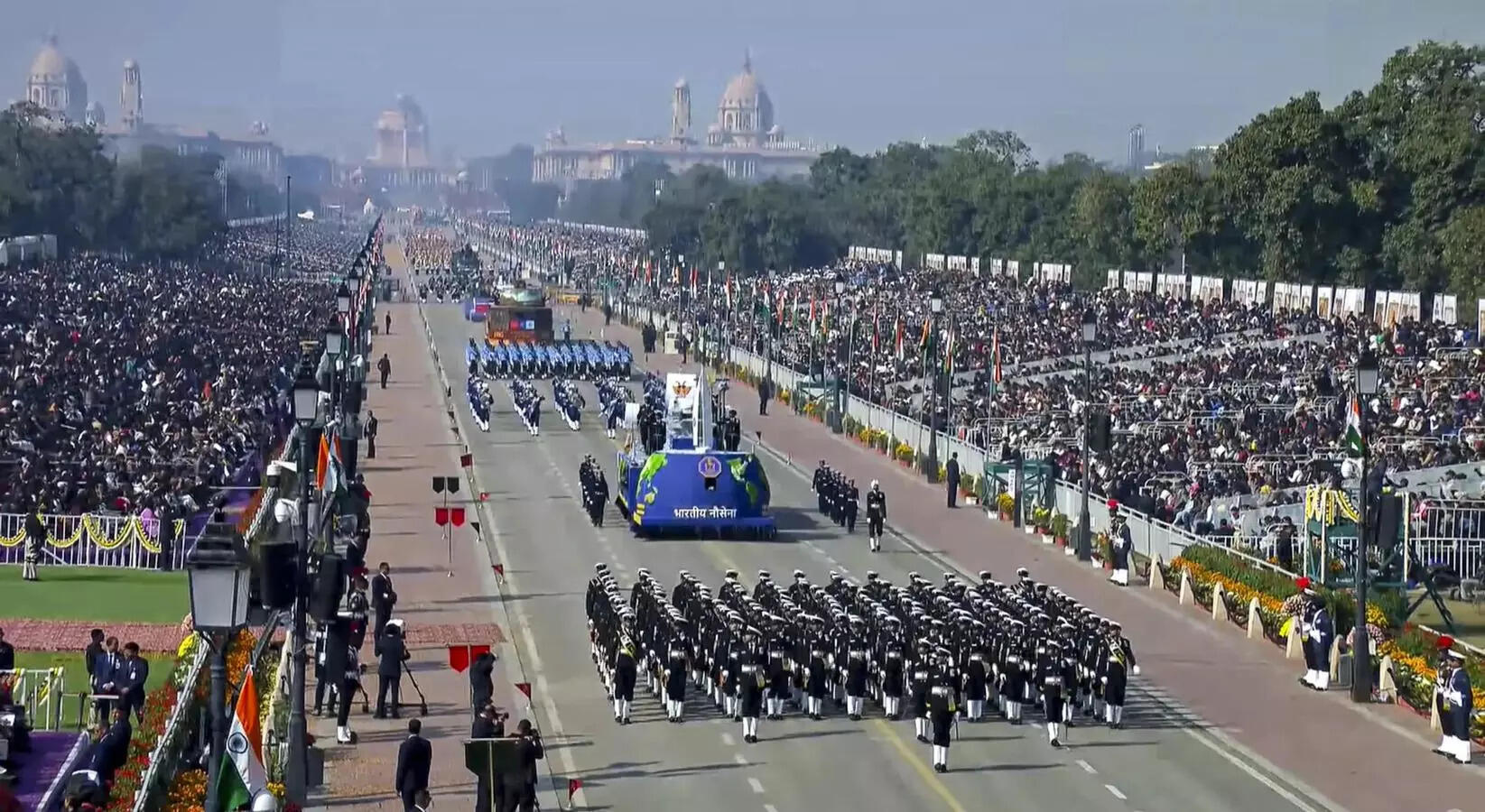
77th Republic Day
The celebrations brought together an unusual sweep of history and the present — from the 150-year legacy of the national song Vande Mataram to displays of the country’s developmental strides, military strength, cultural diversity and participation from citizens from all walks of life.Yet, for all its scale and symbolism, the ceremony inevitably draws the eye back to where it all began.The journey began on January 26, 1950, the day India formally became a Republic. On that morning, Rajendra Prasad, the nation’s first President, unfurled the Tricolour as the ceremonial parade took place at the Irwin Stadium, in the vicinity of Rashtrapati Bhavan and India Gate.
The parade route, and even the space it occupied, would evolve over the decades — mirroring the Republic itself.The ceremonial stretch has since shifted from Irwin Stadium to Rajpath, later renamed Kartavya Path, while, in colonial times, the same avenue linking India Gate to Rashtrapati Bhavan was known as Kingsway.Accompanied by a 31-gun salute near India Gate, the unfurling of the flag was a declaration to the world of India’s new status as a Republic. With the world’s lengthiest written Constitution coming into force that day, the framework for the nation’s future was set, a constitutional journey that has now spanned more than seven decades.
When the Republic was still an idea taking shape
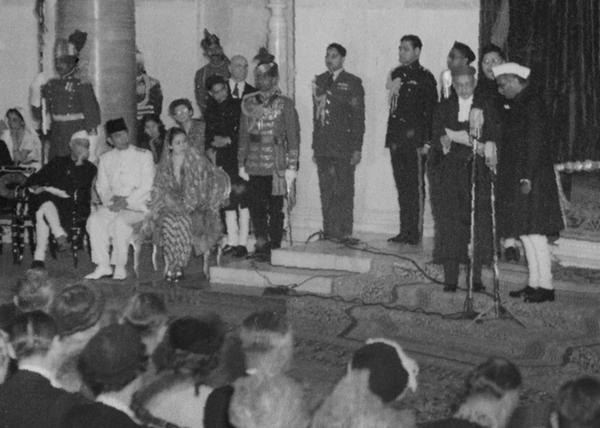
January 26, 1950. At 10:18am, a new chapter quietly but decisively opened in India’s long history.Nearly two and a half years after Independence, the Republic of India was formally born. Inside the grand Durbar Hall of Government House, the former Viceroy’s House, today’s Rashtrapati Bhavan, the Constitution came into force, turning a newly freed nation into a sovereign democratic republic.
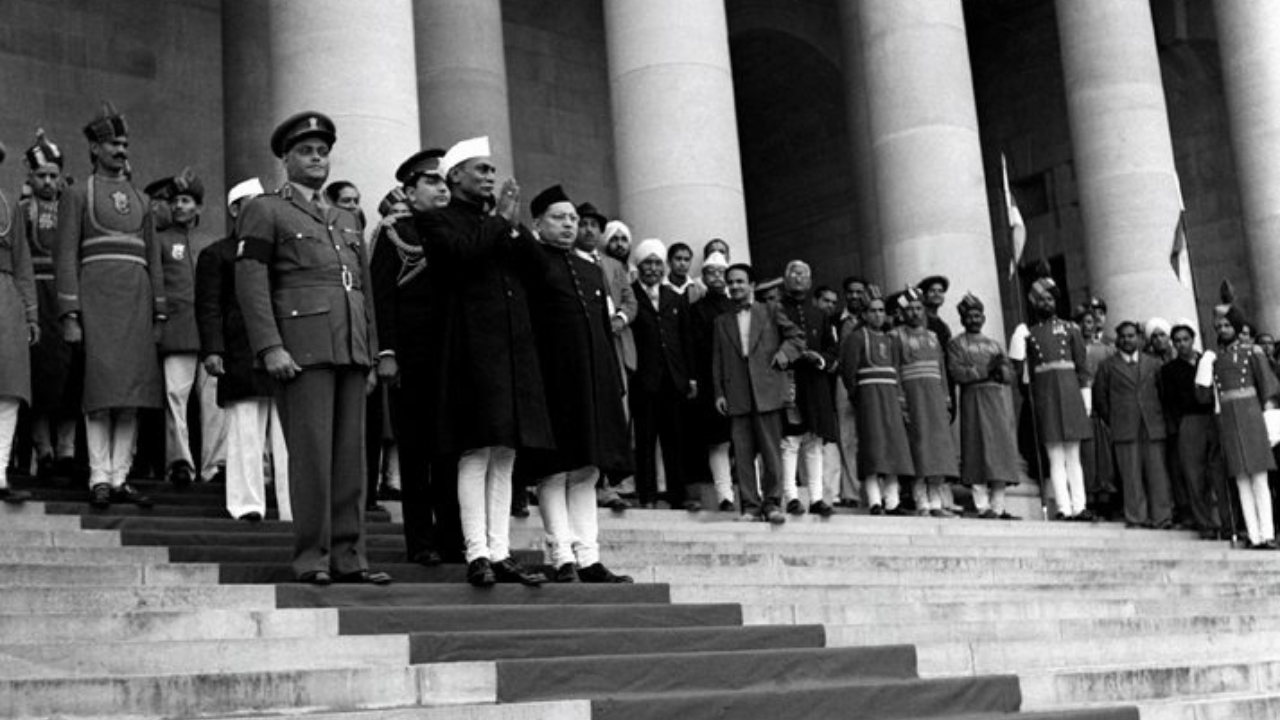
Perched atop the Raisina Hills, the hall bore witness to a moment that marked India’s final break from colonial rule.Chakravarti Rajagopalachari, the last Governor-General, read out the proclamation announcing that India was no longer a Dominion. The country had stepped into full self-rule.Minutes later, Rajendra Prasad took oath as the first President of the Republic, assuming the highest constitutional office in the land.
10:18 am, January 26, 1950: The Republic is proclaimed
India’s oldest defence magazine, Fauji Akhbar, captured the drama of that morning with remarkable precision.“At the most solemn ceremony, held in the brilliantly lit and high domes of Durbar Hall at Government House, India was declared a Sovereign Democratic Republic exactly at 18 minutes past 10 on the morning of Thursday, January 26, 1950,” the magazine reported in its February 4 issue titled Birth of a Republic.
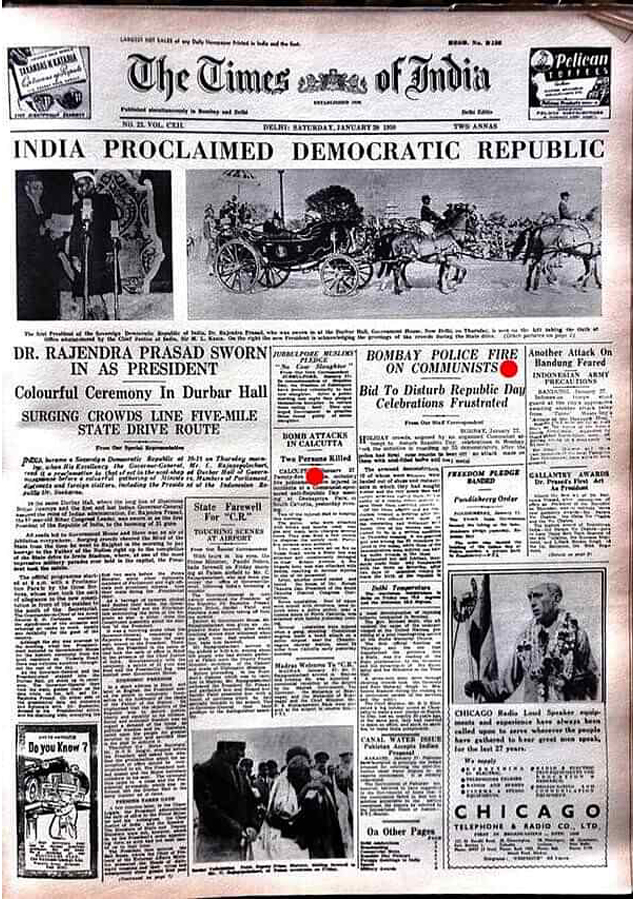
“Six minutes later, Rajendra Prasad was sworn in as President,” it added.The announcement was followed by a salute of 31 guns, echoing across the capital shortly after 10:30am — a sound that signalled the arrival of a new nation.
‘India, that is Bharat’: The words that sealed the moment
Reading from the Constitution, Rajagopalachari formally declared the Republic of “India, that is, Bharat,” invoking Article 1. The proclamation affirmed that the new nation would be a Union of States, bringing together former Governor’s provinces, Indian states, and Chief Commissioners’ provinces under one constitutional umbrella.
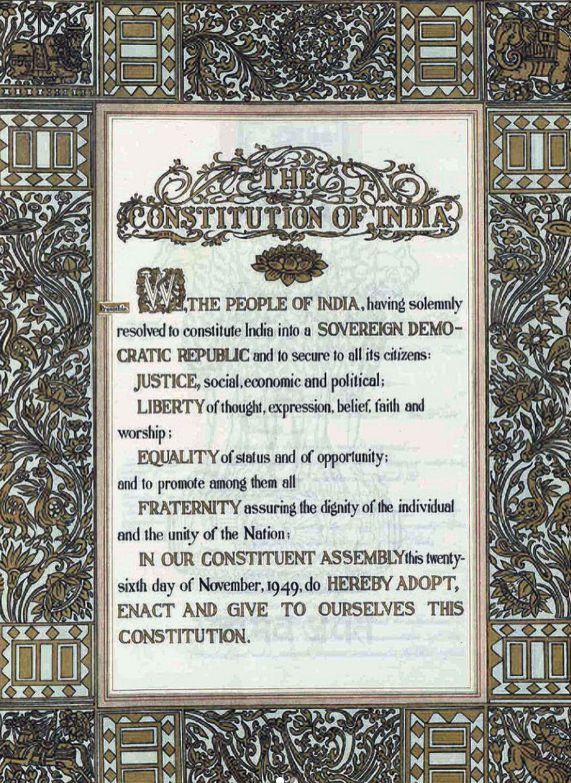
With the declaration complete, the retiring Governor-General stepped aside and invited Rajendra Prasad to occupy the Presidential seat — a quiet but powerful handover from colonial authority to constitutional leadership.
First President’s address
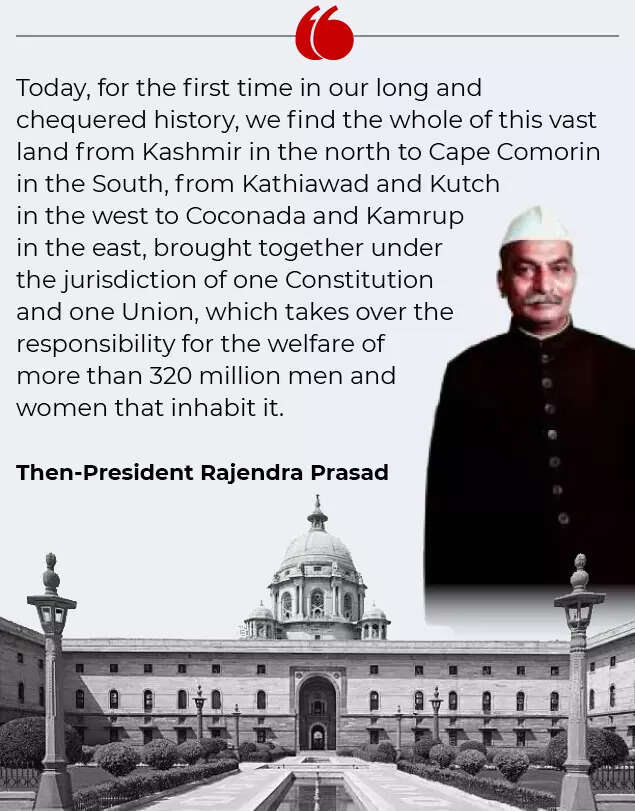
Addressing a nation of around 320 million people, now of over 1.4 billion, Rajendra Prasad delivered his first speech as President, first in Hindi and then in English, mirroring the diversity of the country he now represented.“Today, for the first time in our long and chequered history, we find the whole of this vast land… brought together under the jurisdiction of one Constitution and one Union,” he said, speaking of a nation stretching from Kashmir to Cape Comorin, from Kathiawad to Kamrup.
The Durbar Hall was filled with dignitaries: Prime Minister Jawaharlal Nehru, members of the Constituent Assembly, and leaders who had shepherded India through freedom and into republican governance.Just two days earlier, Prasad had announced Jana Gana Mana as the national anthem and Vande Mataram as the national song, giving formal shape to the symbols of the new Republic.
Soon after, the Constituent Assembly adjourned sine die — its task complete — and later transformed into the Parliament of India.
The day the Republic stepped out onto the streets
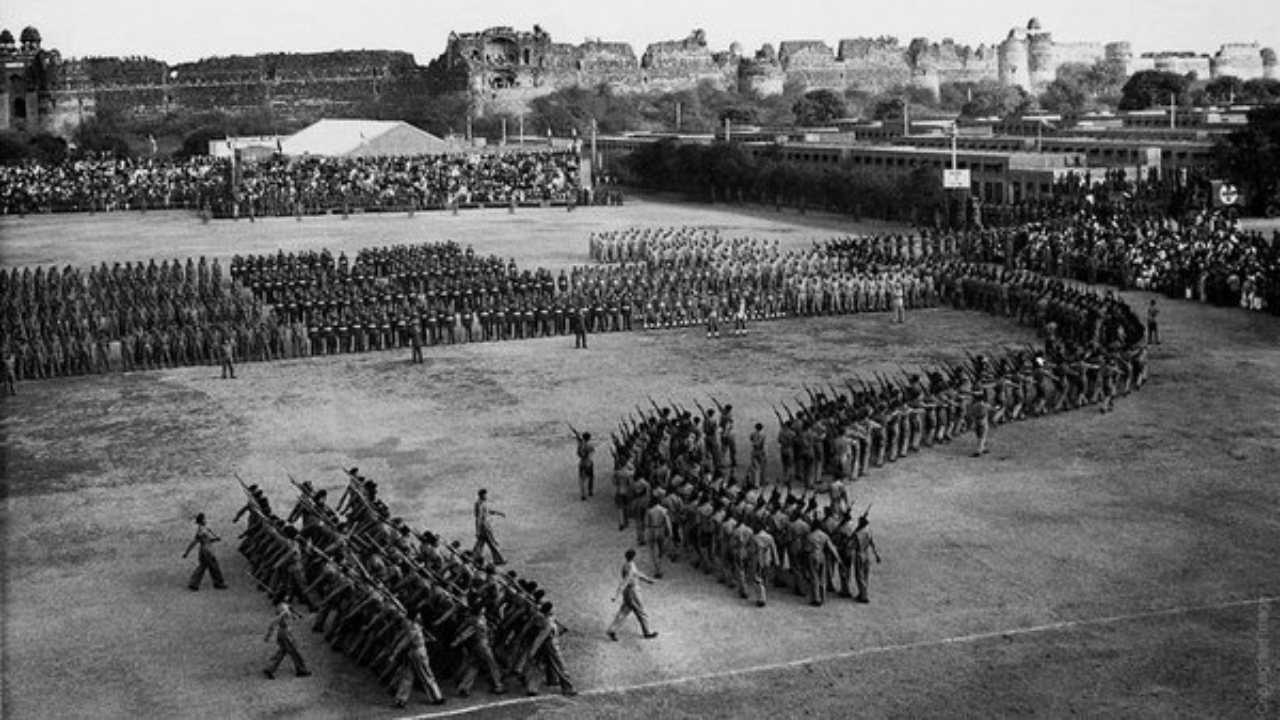
While history was being written inside the halls of power, the celebrations belonged to the people.At the Irwin Amphitheatre — today’s Major Dhyan Chand National Stadium — nearly 15,000 citizens gathered to witness the first Republic Day parade. Built in 1933 and gifted by the Maharaja of Bhavnagar, the venue was already steeped in imperial history, now repurposed for a republican future.Indonesia’s President Sukarno, a close friend of India and a future co-founder of the Non-Aligned Movement, was the chief guest.
(File photo)
Iconic scenes unfolded across Delhi: troops marching with the Old Fort as their backdrop; President Rajendra Prasad riding ceremonially through the capital in a buggy, without any security cover; crowds lining rooftops, trees and balconies, greeting him with shouts of “jai”.As the procession moved through what is now Vijay Chowk, Prasad folded his hands in greeting, responding warmly to the cheers.“The drive ended exactly at 3:45 pm at the Irwin Amphitheatre,” Fauji Akhbar recorded, “where 3,000 officers and men of the three Armed Services of India and the police, along with massed bands, had taken up positions for the Ceremonial Parade.”The parade itself, inherited from the British Raj, was transformed from a display of imperial power into a celebration of national unity, discipline and strength.
Why January 26?
The choice of the date was no accident.For years before Independence, January 26 had been observed as Purna Swaraj Diwas. At the Indian National Congress’s Lahore session in December 1929, under Jawaharlal Nehru’s presidency, the demand for complete independence had been formally declared.On January 26, 1930, Indians across the country were urged to mark the day as Independence Day — a symbolic rejection of British dominion status after negotiations collapsed.That legacy made January 26 the natural date for the Constitution to come into force two decades later.
From Irwin Stadium to Kartavya Path
Since 1950, Republic Day has grown into one of India’s most important national rituals — an annual reaffirmation of constitutional values.The parade moved to Rajpath, now Kartavya Path, in 1955. It evolved to include displays of military capability, cultural tableaux from states and Union Territories, and the conferral of Padma awards.
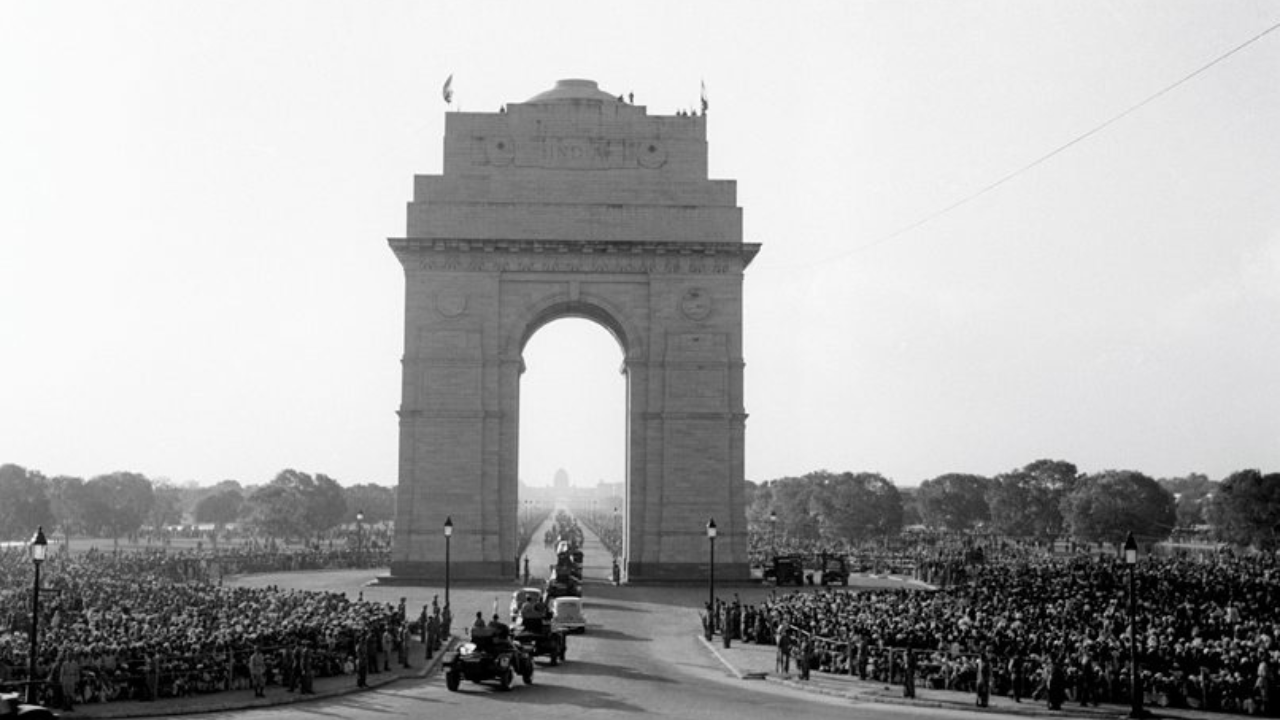
January 26, 1950
Global leaders have attended as chief guests — from Cold War allies to modern strategic partners. In recent decades, the list has included Vladimir Putin, Barack Obama, and leaders from Japan, France and now the European Union.Yet at its core, Republic Day remains anchored to that winter morning in 1950 — when India formally chose to govern itself through law, democracy and the will of its people.The spectacle may change with time. The setting may be renamed. But the promise of that first Republic Day endures.