Urban drinkers drift away from ‘dry months’
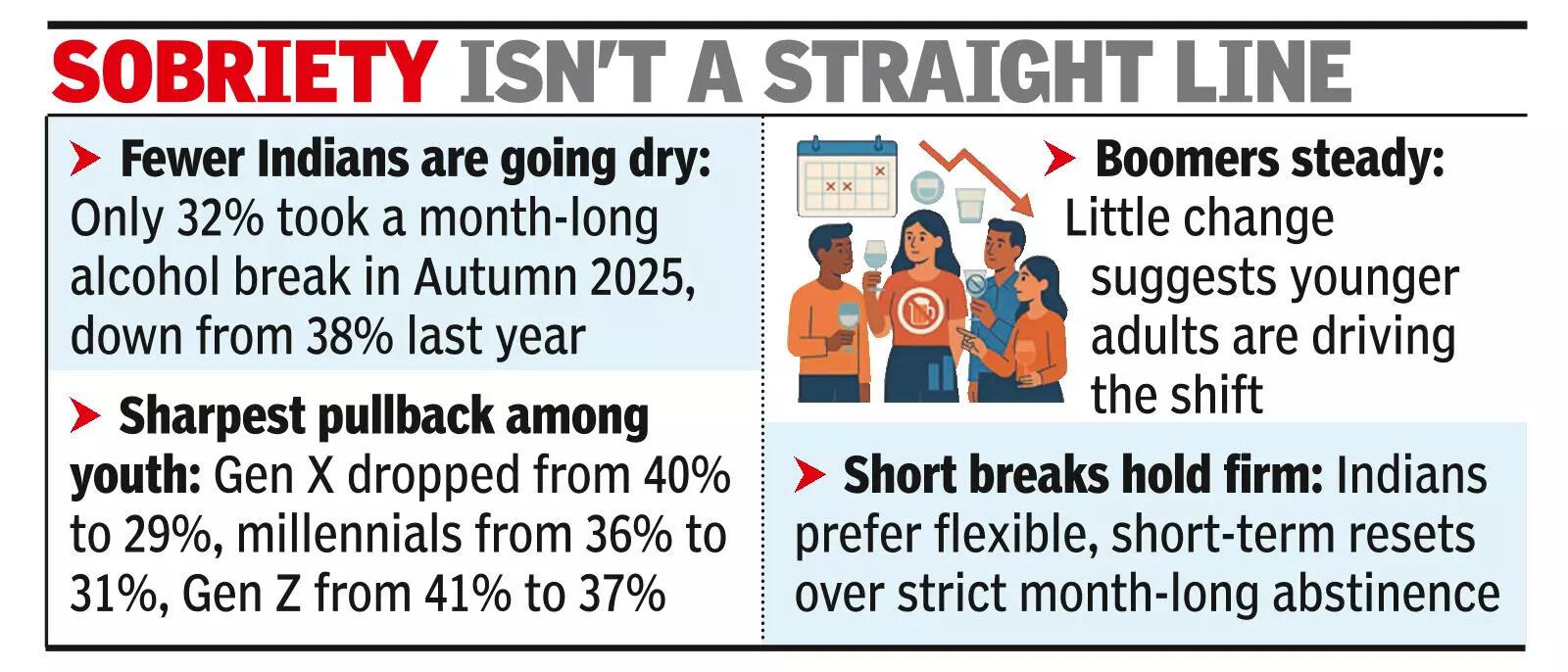
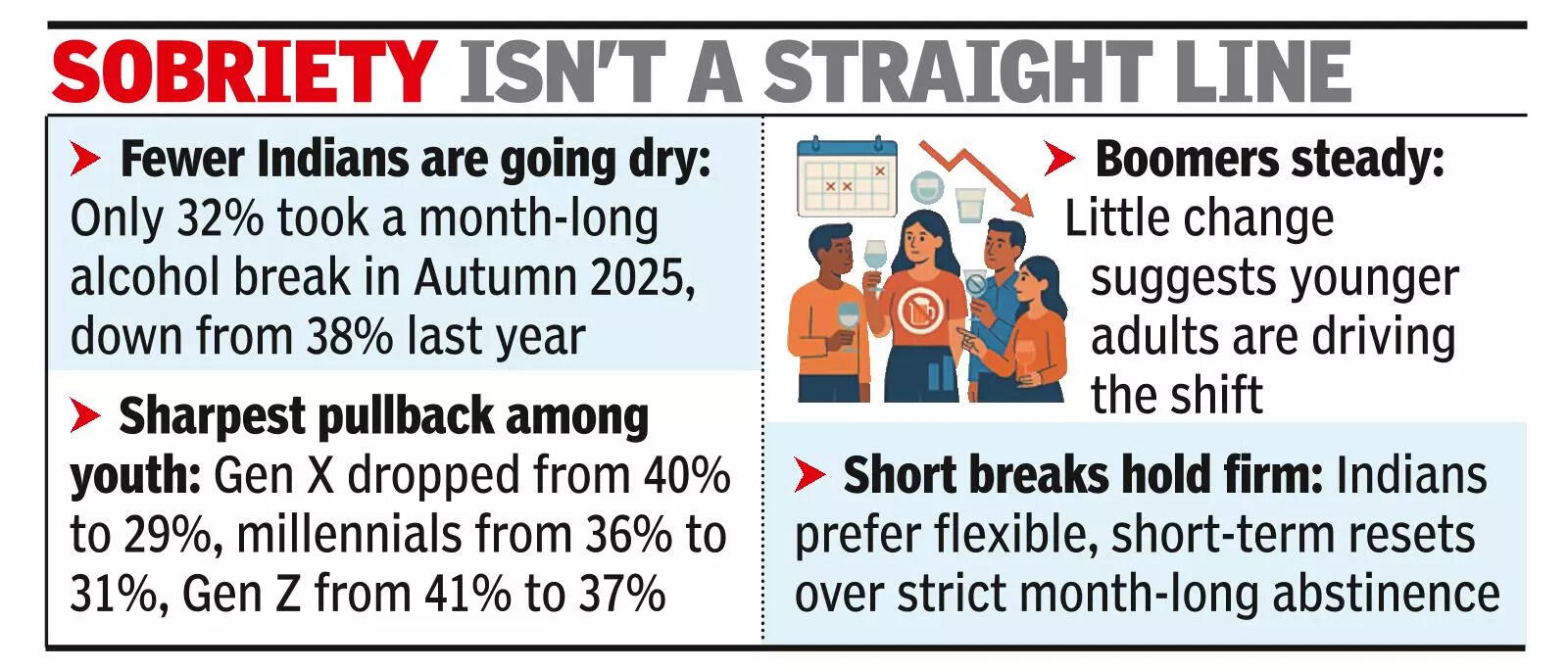
The findings point to a clear loss of appetite for long abstinence spells among city drinkers. The Bevtrac survey is conducted twice yearly across 15 major markets, including India, with a total sample of over 26,000 qualified respondents. Respondents from India were adults aged over 21, with a monthly household income of over Rs 30,001 before taxes, and representative of the 11 metro areas. Shorter breaks, however, were holding firm. Data suggested many Indians are moderating their drinking rather than committing to strict “dry Jan”-style pledges. Consumers appear to prefer shorter, flexible resets that fit around work, festivals, and social events. India still ranked high on temporary abstinence compared with other major drinking markets tracked by IWSR, followed by Brazil at 31% and Mexico at 29%. But the latest data indicated that the country is carving its own path as global brands talk up low- and no-alcohol launches and wellness-led campaigns. For drinks companies, the message is nuanced. On one hand, Indian drinkers are becoming more selective and more informed. Premium products, at-home occasions, and experimentation with styles such as craft spirits and ready-to-drink formats continue to shape urban consumption. On the other hand, the fading popularity of month-long breaks shows a limited appetite for rigid sobriety trends imported from the West. “India’s drinking population is undoubtedly becoming more sophisticated, and the Indian market is increasingly central to the business plans of the international drinks industry,” Lodewijks added.