World has ‘never experienced’ refining margins like this
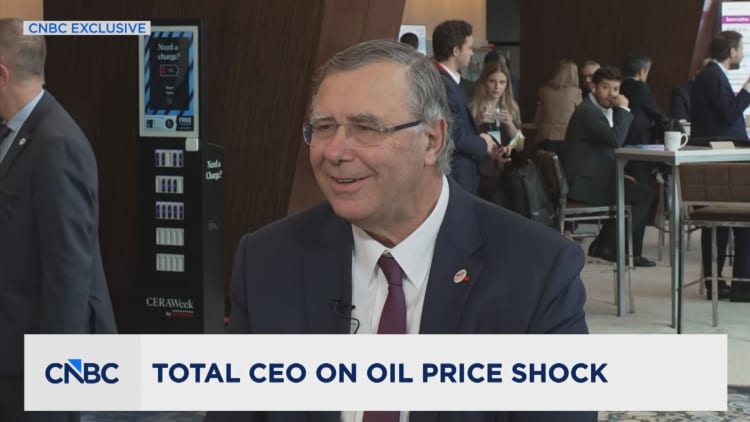

Roughly 15% of TotalEnergies’ production is offline, as the war with Iran nears the one-month mark, but surging oil prices have more than made up for the lost barrels, chairman and CEO Patrick Pouyanné told CNBC in an exclusive interview.
With Brent crude trading solidly above $100 a barrel, much of the attention has focused on oil prices, but Pouyanné said the crisis is having a much larger impact on product prices.
“The Brent market is ok, but the products market, which is the one which impacts customers … is much higher than Brent,” he told CNBC at S&P Global’s CERAWeek energy conference in Houston. He added, the world has “never experienced” refining margins from products including Asian jet fuel at current levels. In addition to petroleum products, about 30% of global fertilizer moves through the Strait of Hormuz, jeopardizing the spring planting season.
TotalEnergies is a major player in the global LNG market, including the largest exporter of U.S. LNG. The CEO said the company can still fulfill customer orders in Europe and Asia thanks to its diversified global portfolio.
Last week, QatarEnergy said its Ras Laffan plant suffered “extensive damage” following Iranian drone attacks, effectively taking 20% of global LNG supply offline. The shutdown has sent natural gas prices in Europe and Asia surging.
Pouyanné expects prices could move substantially higher if the war drags on through the summer, since Asian demand rises over the summer just as Europe looks to refill storage. European natural gas traded around $18 per million British thermal units Tuesday, but Pouyanné said prices could hit $40/MMBtu over the summer if the conflict continues.
TotalEnergies is a major investor in U.S. energy. On Monday, it struck a deal with the Trump administration to abandon its offshore wind projects in return for $1 billion. The company agreed to reinvest the money into U.S. oil and gas projects instead.
The federal government is key for offshore wind permitting, and the current administration has been a vocal critic of the industry. Pouyanné said he did not want to litigate with the administration over its offshore wind leases – acquired under former President Joe Biden – and so approached the administration with a deal. He added that in the U.S. offshore wind no longer makes sense given cheaper alternatives.
“In the specific situation of the U.S., where you have a lot of land, you have a lot of gas, you have a lot of coal, you have a lot of land to build onshore solar, onshore wind, batteries, we don’t need to have offshore wind,” he said. “It’s a marginal technology, which is not affordable.”
“I prefer to allocate my capital to technologies which are more efficient, which give affordable electricity to customers,” he said.
As part of its expanding U.S. portfolio, TotalEnergies recently inked a 15-year agreement with Google to supply renewable power for data centers. Pouyanné said other hyperscalers – including Amazon and Microsoft – are now speaking to TotalEnergies directly.
“These hyperscalers have understood that an energy company – like TotalEnergies – because we have also capacity, not only to build, to invest, to have land, to trade, we were quite a good partner for them,” he said.