AbbVie’s patent on immunology therapy rejected


New Delhi: In good news for patients, Indian Patent Office has refused a patent on MNC firm AbbVie’s blockbuster immunology therapy Rinvoq, paving the way for affordable versions to enter the domestic market. In a recent hearing, the Delhi Patent Office held that the claimed invention was “obvious” and lacked inventive step, a violation of Section 3(d) of the Indian Patent Act, legal experts told TOI.
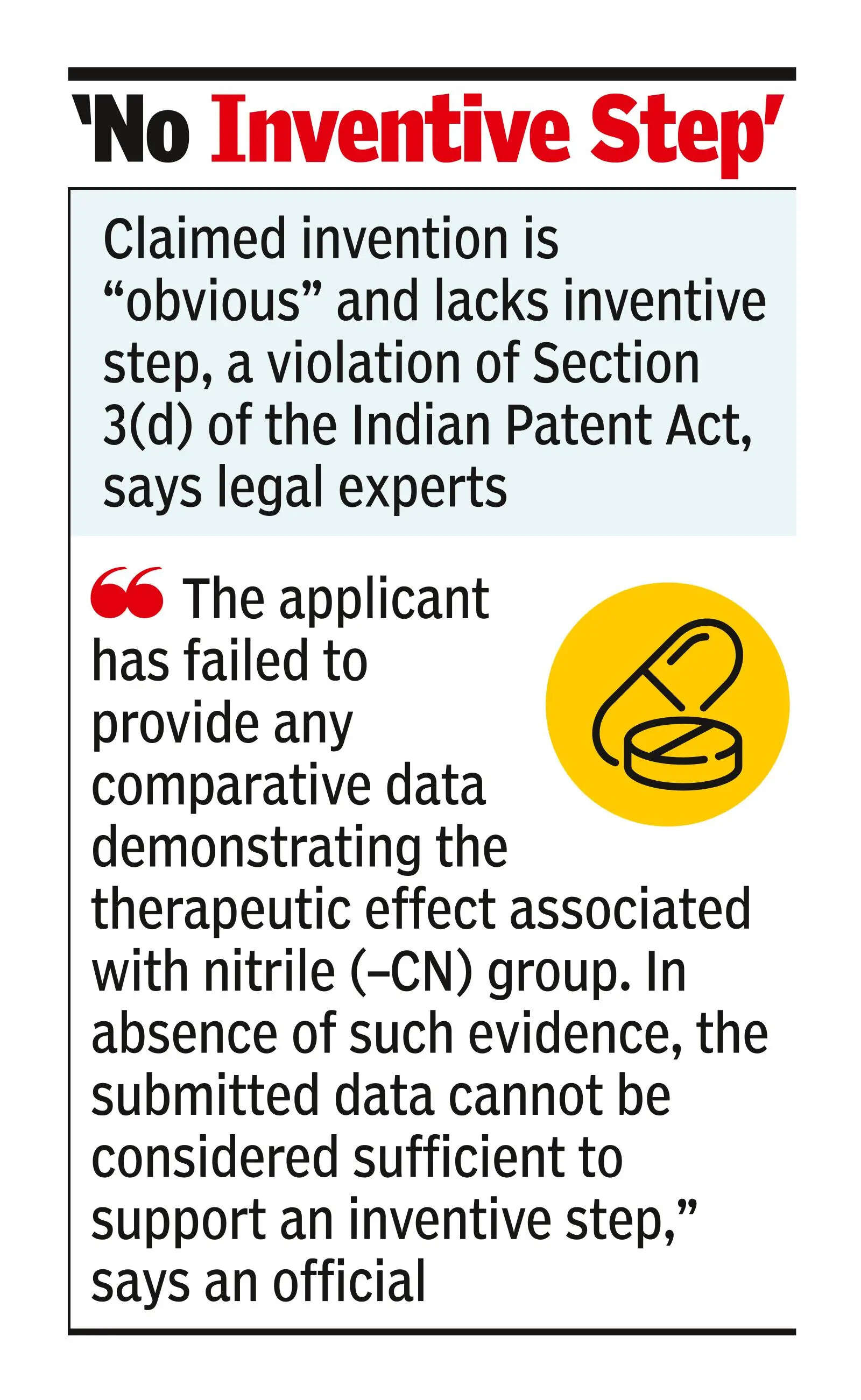
No inventive step
Section 3(d), an important safeguard in the patent law, bars patents on new forms of known substances, unless they demonstrate a significant enhancement in therapeutic efficacy. Swiss firm Novartis has lost the patent on its blockbuster cancer drug Glivec in 2013 under this provision, aimed at preventing “evergreening” of pharmaceutical patents. The application, filed in 2012, faced pre-grant opposition from generic drug makers including MSN Labs and Natco, with hearings stretching over nearly a year. Rinvoq (upadacitinib), used for the treatment of rheumatoid arthritis and several autoimmune diseases, is AbbVie’s second best-selling drug behind Skyrizi, with around $10 billion in sales. S Majumdar from law firm S Majumdar & Co who represented Natco said: “This decision provides important clarity on core patent law concepts, particularly obviousness and technical advance – especially in situations involving common inventors between prior art and patent application- along with evergreening and extent of disclosure required to sustain a priority claim.” Sources said AbbVie is yet to launch the drug in India and has sought approval from regulator to introduce it for atopic dermatitis.